What is Hidradenitis suppurativa?
Also called Acne inversa or Verneuil‘s disease
The first step to treating an abscess is the external application of blistering ointments or antibiotic salves and tinctures. If the abscess continues to grow in size, a surgical incision may be needed to deroof the abscess, and drain secretions. Failure to effectively contain the abscess externally may result in the infection spreading further into the neighboring tissue. Such tunnels filled with pus are called fistulas.
If abscesses and fistulas form repeatedly, a patient may suffer from a condition called hidradenitis suppurativa, which is also known as acne inversa – in which the most affected areas are armpits, groin area, anal, and breast regions. No other skin disease is known to cause such severe impairment to a patient’s quality of life *.

Have you had inflammatory nodes more than once in the last 6 months in areas such as: Armpits, groins, under the breast or in the perianal area? Then you probably have Hidradenitis Suppurativa (HS).

Inflammation occurs mainly in the armpit, pubic and groin areas. All regions where skin rubs against skin are at risk. However, all other regions of the body can also be affected.
The disease is divided into different degrees of severity according to Hurley:
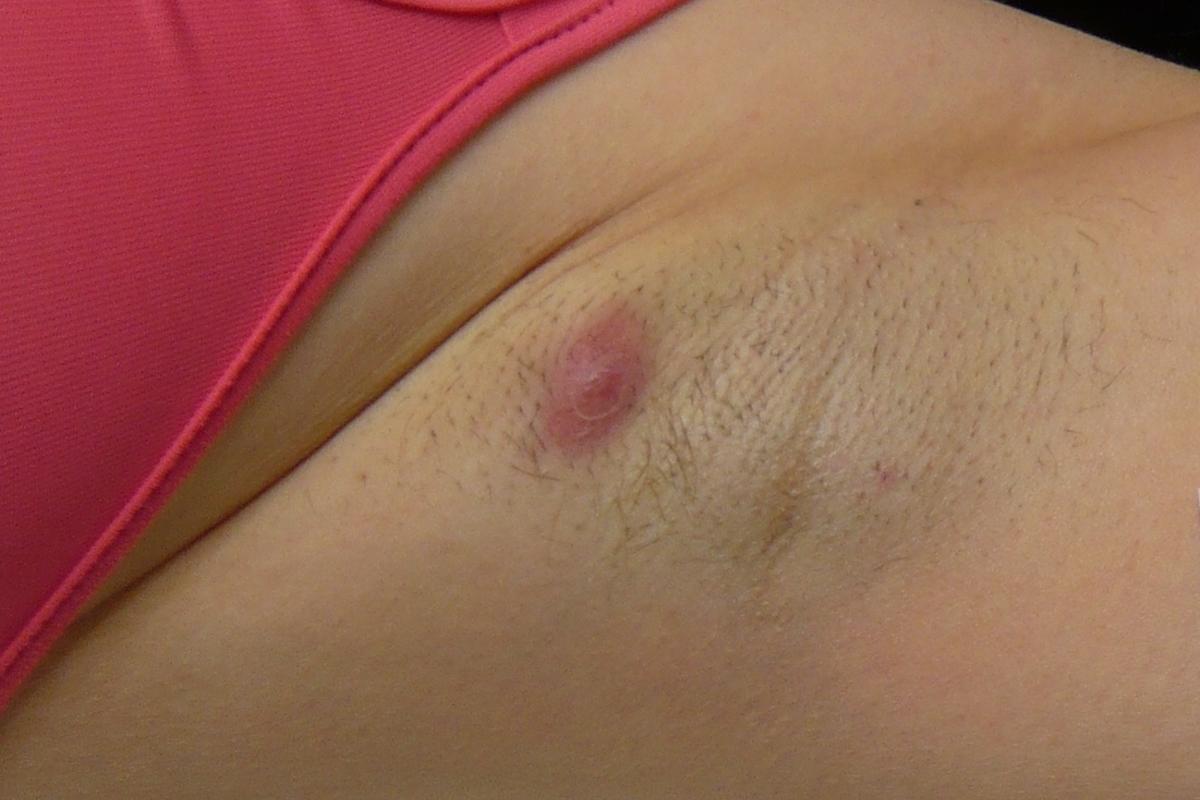
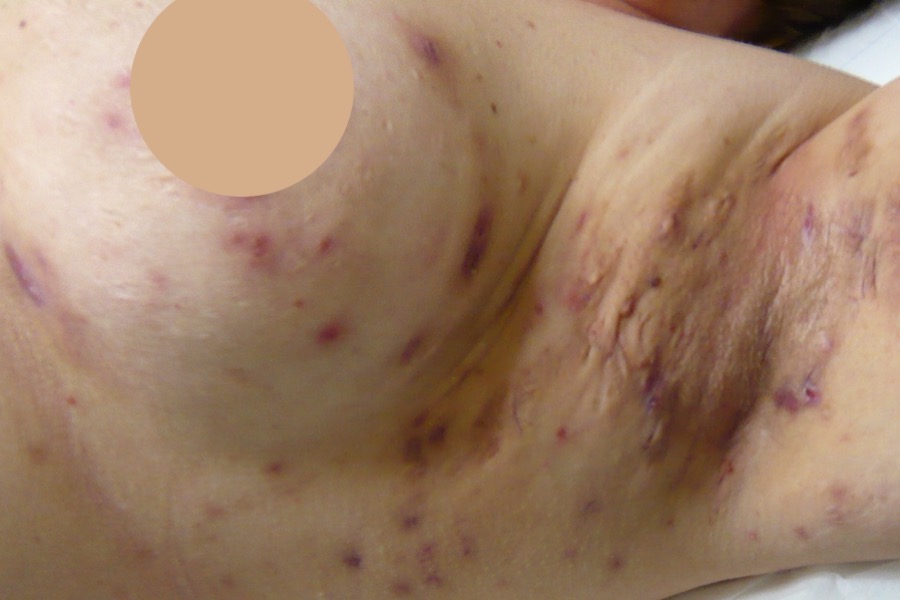
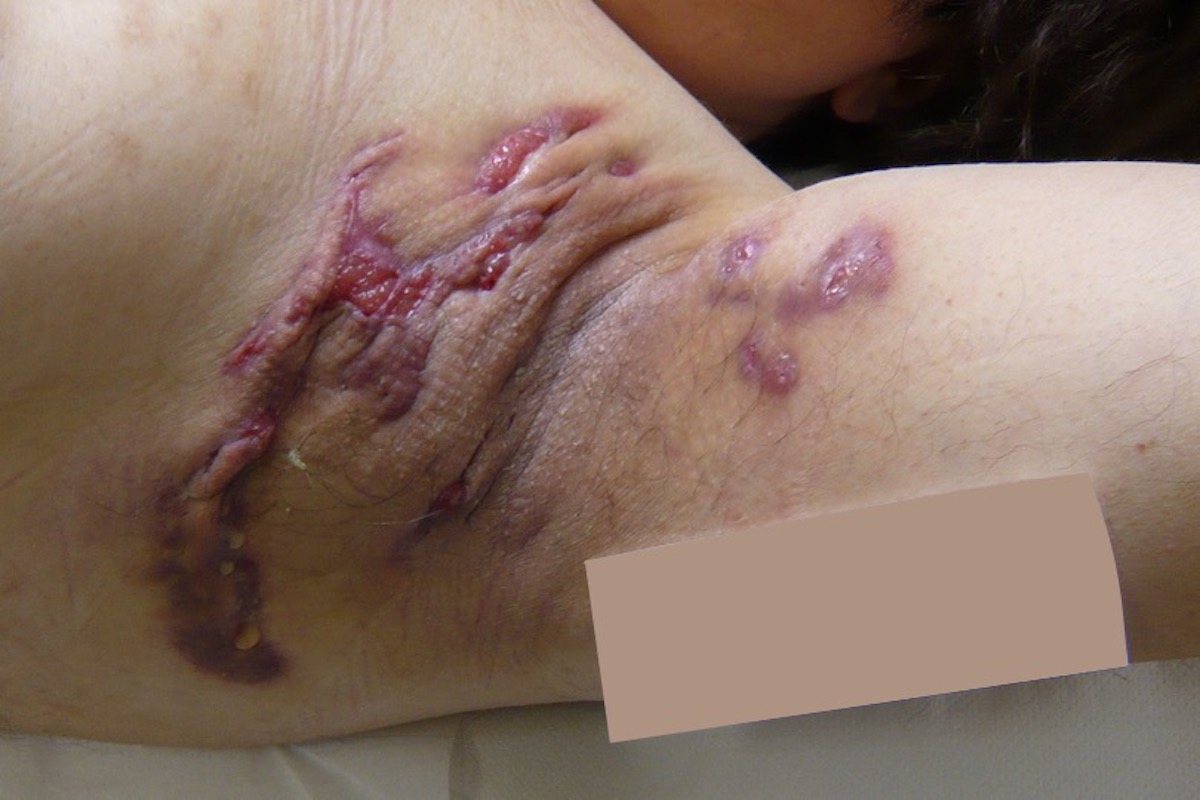
Some Facts
Stationary abscess operations in 2013 in Germany
Minimum number of HS affected people in Germany
HS first mentioned by French surgeon Velpeau
Possible degree of disability due to HS
The chronic disease hidradenitis suppurativa
Despite intensive research over the last decade, the pathogenesis of hidradenitis suppurativa / acne inversa is still not fully understood. In particular, the reason for the chronic nature of the disease has not been discovered or agreed upon within the medical community. The major pathogenic cause, however, is believed to be the hyperkeratosis with an occlusion of the upper part of the hair follicle.
The creation of an abscess in hidradenitis suppurativa
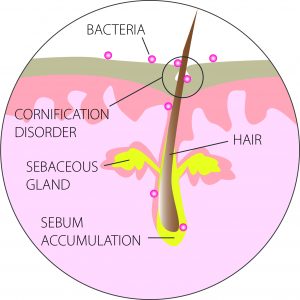
Hyperkeratosis
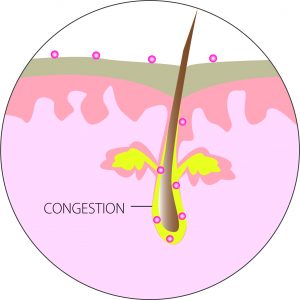
Sebum Overproduction
With the sebum production being trapped within the follicle due to the blockage the follicle expands further. Bacteria starts to infiltrate the sebum-filled cyst.

Inflammation
Inflammation develops in the sebaceous gland and the follicle. As a result of the bacterial growth pus forms, and eventually, ruptures the follicle’s duct.
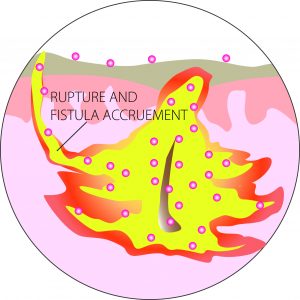
Abscess
Pus spreads into the tissue. The body then encloses the affected area, as it becomes increasingly swollen with pus. The result is an active abscess, fistula development is possible.
What HS means to patients






Self-Help Forums


* S1 Guidelines for the therapy of Hidradenitis suppurativa/Acne inversa. To the Guidelines